
Card Care
How to protect Pokémon cards: sleeves, top-loaders and binders
A practical guide to sleeves, rigid holders, binder pages and home storage, with simple habits that help preserve a card’s condition before you scan or handle it.
Published
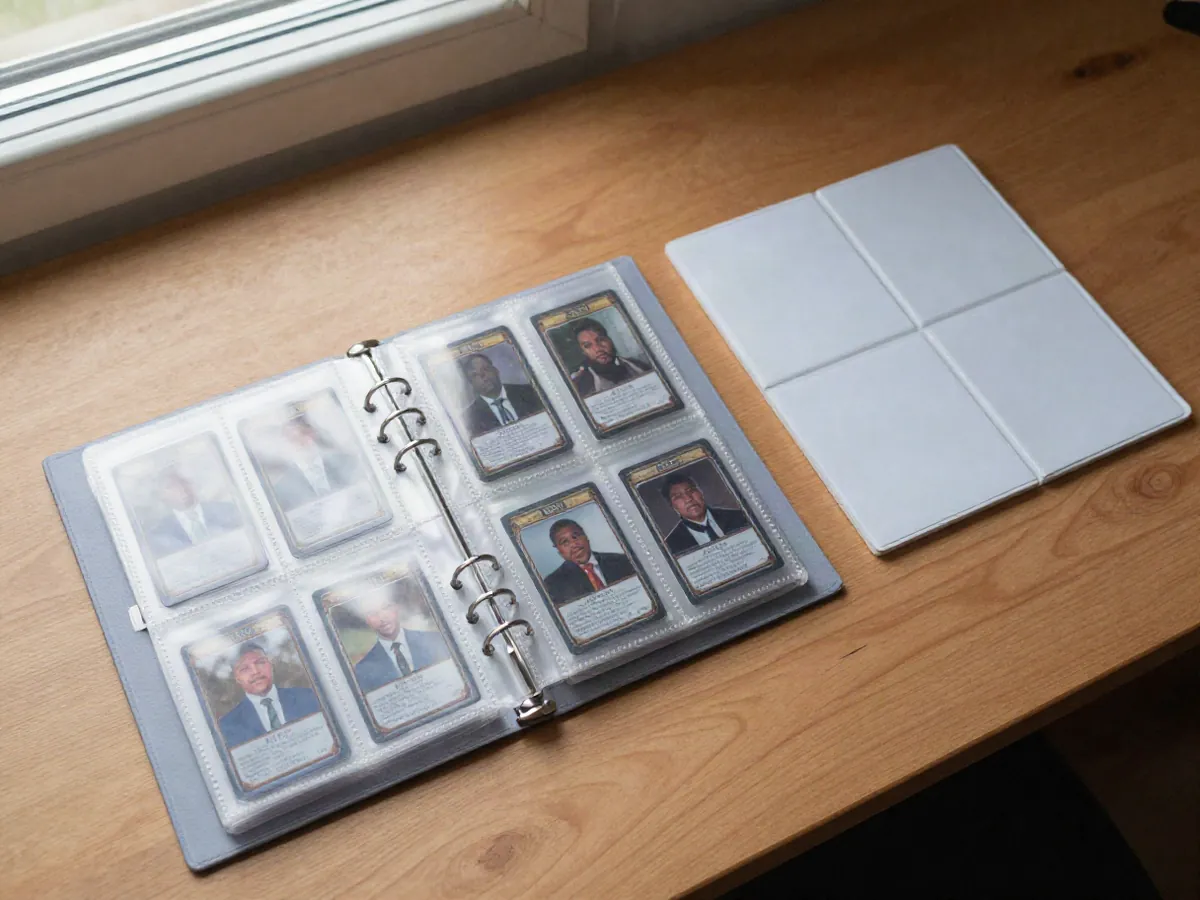
Protection starts before the sleeve
The safest storage routine begins with clean, dry hands and a clear work surface. Hold a card by its edges, rather than rubbing the face or pressing a thumb across the surface. Oils, grit and crumbs can leave marks, and a small bit of debris trapped under a sleeve can drag across the finish as the card slides in.
Set out the sleeve or holder before picking up the card. Keep drinks, food and pets away from the work area, and do not stack loose cards face to face. If a card is damp or has residue, avoid wiping it; rubbing can make the damage worse. Let it air-dry in a safe place and ask a conservator for advice if it is valuable or unusual.
Choose a sleeve that fits the job
For everyday handling, a standard-sized, clear, archival-quality sleeve is a useful first layer. It should be clean, undamaged and close to the card’s size, with enough room to insert the card without force. A sleeve that is too tight can catch corners; one that is much too loose lets the card shift and rub against the opening.
A perfect-fit sleeve hugs the card more closely and can be used as an inner layer beneath a second sleeve. The close fit can reduce movement, but inserting one takes care: align the card and sleeve, keep the edges straight, and stop if you feel resistance. Some collectors prefer a single looser sleeve because it is easier to remove safely. Neither style repairs existing wear, and the choice should suit the card and your handling habits.
When a top-loader makes sense
A top-loader is a rigid plastic holder that adds support during transport, sorting or display. Usually place a sleeved card inside it, with the sleeve opening oriented so the card is less likely to slide out. Insert slowly on a level surface and never force a corner past resistance. A semi-rigid holder is another option when you want support with a little more flexibility.
Rigid holders are useful for cards you handle often or want to keep separate from a stack, but they are not a complete storage system. Store them upright in a snug box or divider so they cannot lean sharply, bow or fall. Do not put a bare card into a holder with a rough edge, and avoid stacking heavy objects on top. For travel, use a closed container that prevents the holders from shifting around.
Binder pages and long-term storage
Binder pages make a collection easy to browse, provided the pockets fit the cards and the binder is stored carefully. Use clean pages made for trading cards, slide cards into pockets without bending them, and avoid overfilling a page. Pockets that are too tight can stress corners; very loose pockets allow cards to slip out when the binder is turned.
Choose a binder that closes without pressing hard on the pages. Keep it upright or flat as the manufacturer recommends, and do not cram it onto a shelf where the covers bow. Ring binders need extra care: pages near the rings can be pressed or caught, so avoid placing cards in pockets that sit directly over the hardware. For a small group of especially important cards, individual sleeves and holders in a storage box may be easier to inspect.
Keep humidity, heat and light steady
A stable, dry indoor location is better than an attic, basement, garage or sunny windowsill, where conditions can swing. Damp air can encourage mold and warp paper; very dry conditions and rapid changes can also stress materials. Keep cards away from leaks, exterior walls that feel damp, heaters, cooking areas and bathrooms. A clean closet or room shelf is often a more predictable choice. If your home has seasonal swings, place a small room thermometer and humidity monitor near the storage area and check it occasionally; avoid chasing a single reading with sudden changes. Keep the collection off the floor, where a minor leak can reach it first, and leave space around the box so air can circulate. A sealed plastic bin may help against dust or spills, but do not seal cards away while they are damp, and avoid putting desiccant packs directly against cards or sleeves.
Light can fade inks and finishes over time, especially direct sunlight and strong display lighting. Keep stored cards in an opaque box or closed binder when you are not looking through them. If you display a card, choose a spot away from windows and heat, and rotate it back into dark storage. Avoid trying to fix a warped card with heat, pressure or household chemicals; those methods may cause permanent damage.
Check condition before scanning
A scan can help identify a card, but it cannot reveal every condition detail. Before scanning, take the card out only if you can do so without forcing it, then check the front and back under even light. Look at the corners, edges, surface and any foil areas for whitening, dents, scratches, bends or residue. Avoid touching the face while you inspect it.
Record the exact set, card number and variant, then note the condition separately from the identification result. A sleeve can hide dust or glare, while a rigid holder can create reflections, so adjust the angle or remove the card carefully if needed. Put it back into clean protection promptly. If you compare condition later, use similar lighting and the same careful process; phone images and scans are useful records, not a substitute for close inspection.
Storage mistakes that cause trouble
A few common habits create avoidable wear. Pulling a card quickly from a tight sleeve can catch a corner; sliding cards across a tabletop can scratch them; and leaving a stack near a window can expose it to light and heat. Handle one card at a time, use a clean surface, and replace sleeves that are cloudy, split, dirty or bent. When moving a stack, support it from below instead of pinching its sides, and keep the stack low enough that it cannot tip. If cards are sorted in a box, dividers can keep them upright without squeezing them together; leave a little room to lift one card out cleanly.
Avoid adhesive tape on card surfaces or sleeves, rubber bands around stacks, and loose cards rattling in a box. Do not use household cleaners, polish or a cloth to remove marks. These can lift ink, alter a finish or push grit across the surface. If you are unsure whether a mark is dirt or damage, leave it alone and seek experienced conservation guidance rather than experimenting.
- Handling a card by its edges and keeping the work area clean
- Forcing a card into a tight sleeve or holder
- Leaving a collection in sun, damp rooms or hot storage
- Using tape, bands, cleaners or polishing cloths on cards
- Treating a scan or sleeve as proof of condition
Quick answers
How often should I change sleeves? Replace one when it is torn, cloudy, dirty, stretched or no longer holds the card securely. If a sleeve looks clean and intact, there is no need to remove the card just to change it; unnecessary handling creates its own risk.
Should every card go in a top-loader? No. Sleeves and a properly stored binder or box are enough for many cards. Use a rigid holder when extra support or separation is useful, and choose a size that does not squeeze the card.
Can I double-sleeve every card? You can, if both sleeves fit smoothly and you can insert the card without pressure. Practice with an ordinary card first. If the inner sleeve bunches or the card catches, stop and use a roomier setup.
Does a scan determine condition? No. A scan may assist identification, but lighting, focus and reflections limit what it can show. Inspect the physical card and treat any market reference as information, not an offer or appraisal.
Sources and further reading
- Pokémon TCG – official site — Official Pokémon TCG information and card resources.
- PSA – FAQ — General card collecting and grading reference; consult the card maker for product-specific care.
Keep exploring
All blog posts
How to build and track a Pokémon TCG deck list on your phone
Plan a legal 60-card list, scan the cards you own, track its changing reference total, and keep useful notes ready to export or share.
Read article
Japanese vs English Pokémon Cards: Collector’s Guide
A practical guide to telling Japanese and English cards apart, reading set identifiers, photographing cards clearly and choosing the right market reference.
Read article