
Authenticity
How to spot a fake Pokémon card
No single trick proves a card is fake. Here is a calm, step-by-step way to compare print, text, card stock, back colour and light, and to know when to ask a trusted shop.
Published
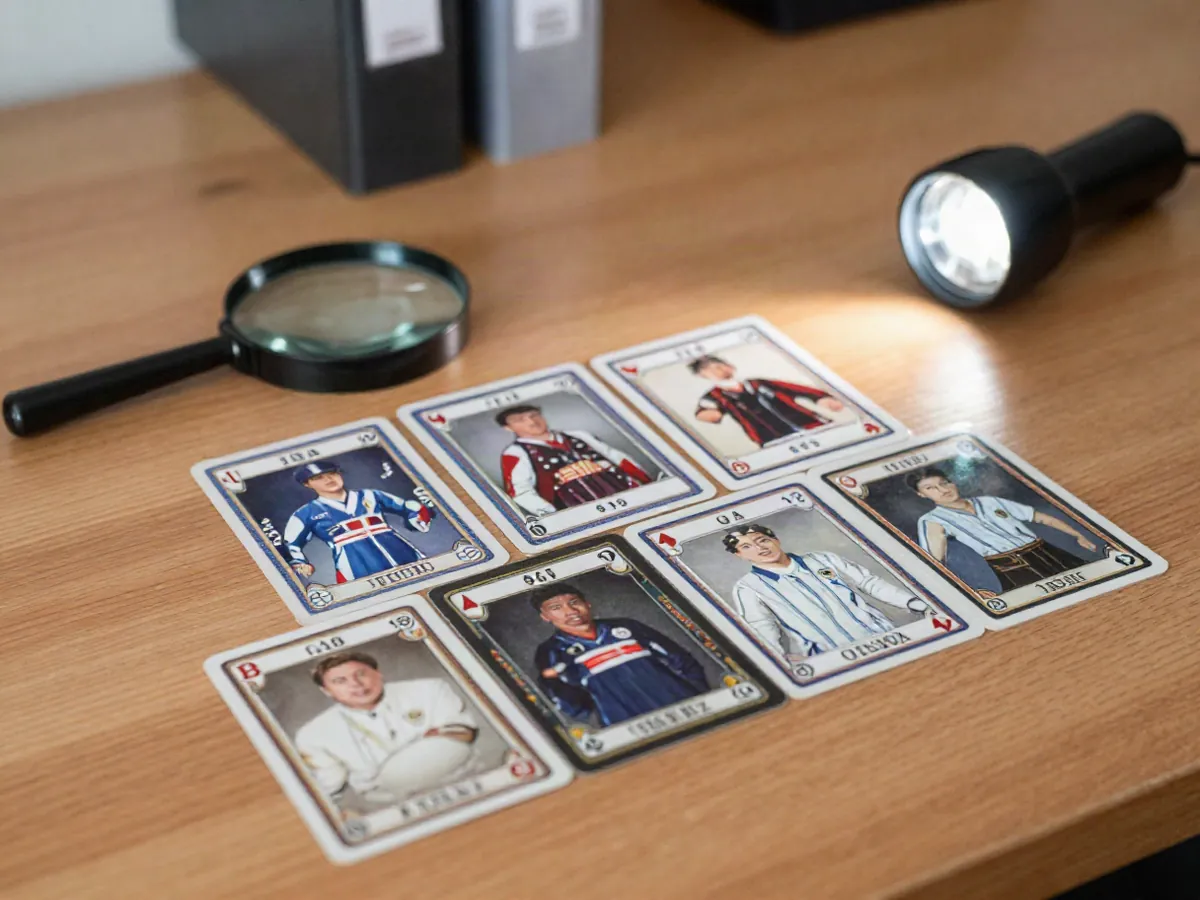
Start with a card you trust
Spotting a fake is mostly about comparison, not a single trick. Without a known genuine card next to you, it is hard to judge a doubtful one, because print finish, colour and card feel change between sets and years. Pick a reference card you know came from a sealed booster pack or a shop you trust, ideally from the same set or at least the same period and language as the card you are checking.
Think of the process as collecting small signals. One odd detail rarely proves anything: printing varies, cards wear, and genuine misprints exist. Several odd details together, though, are a good reason to slow down before you buy, trade or list a card. This guide goes through the checks in the order most people find easiest: print, text, card stock, back, light, and finally what to do when you are still unsure.
Check print quality and colour
Hold the card under steady, even light and look closely at the artwork and the borders. Genuine cards are generally printed with crisp, consistent detail: fine lines in the artwork, small symbols and the edge of the border look sharp. Fakes often look slightly blurry, over-saturated or washed out, and under magnification they can show a visible dot pattern or banding. A small magnifier, or the zoom on your phone camera, helps a lot.
Put the card beside your genuine reference and compare these points one by one:
- Is the border an even, matching shade, or noticeably paler, more orange or streaky than your reference?
- Is the artwork sharp, or does it look soft, pixelated or smudged around the edges of shapes?
- Does the holo foil behave like the reference from that set, with a patterned or textured shine in the right area, rather than a flat rainbow gloss across the whole card?
- Do the type background and the text box colours match your reference card?
Read the fonts, symbols and text closely
Text is where many fakes slip. Read every line: the name, attack names and descriptions, flavour text, HP, the illustrator credit and the small print at the bottom. Look for spelling mistakes, odd spacing, missing accents (for example the é in Pokémon where the genuine card has it), uneven font weight, or letters that look too thin, too bold or stretched compared with your reference.
Then check the details that follow a pattern. Energy symbols should have a consistent shape and size, the HP should sit where your reference shows it, and the collector number at the bottom should follow a sensible format for that set, such as a number followed by the set total on many modern cards. The set symbol, and the regulation mark on newer cards, should appear where the reference has them. Layouts differ between eras and special prints, so always compare against a card from the same period.
Feel the card stock, edges and back
Card stock matters. Genuine cards have a particular stiffness, snap and surface finish, while fakes may feel too flimsy, too thick, too glossy or oddly rough. Look at the edges too: a genuine edge is usually clean and uniform, whereas fakes may show rough cutting, uneven white edges or layers that seem to peel. Comparing thickness and weight with your reference card helps, but never bend a card to test it, because bending can damage a genuine one.
Then turn the card over. The back of a genuine card has a distinctive blue swirl design with a Poké Ball in the centre, and the shade and sharpness are usually consistent among genuine cards of the same era. Fakes often have a back that is noticeably lighter, darker, more purple or washed out, or a blurry centre ball. Also check that the back is aligned with the front in the same way as on your reference, and that the design is not shifted oddly towards one side.
Try the light test the gentle way
The light test is popular: in a dim room, shine a bright phone torch behind a card, ideally one in a sleeve, and see how much light passes through. Genuine cards are often built in layers that block most of the light, while some fakes let noticeably more through or show the artwork glowing on the other side. Treat the result as a hint, not a verdict, because it depends on the era, the card type, how bright the light is and how you hold it.
Keep it gentle. Do not press, flex or hold the torch against the card for long, keep the card in a sleeve, and run the same test on a known genuine card so you have a baseline. If the doubtful card behaves very differently from your reference under identical conditions, add that to your list of signals rather than treating it as proof.
When to ask a trusted shop or grader
If a card fails several checks, or if it matters to you and you cannot compare it with a genuine copy, ask someone with experience. A local trading card shop you trust, an experienced collector in a reputable community, or the authentication service of a professional grading company are all reasonable options. Be ready to share clear photos of the front, back and edges.
Before you hand over money or send a card anywhere, work through this short list:
- Photograph the front, back and edges in even light without glare, so someone else can compare the details.
- Ask a seller for original photos and, if possible, a short video turning the card in the light.
- Prefer sellers and platforms with clear return or buyer-protection terms.
- Be cautious when a deal looks too good to be true, the listing uses stock images, or the seller avoids close-up photos.
Common mistakes and quick answers
The most common mistake is judging by one detail. The second is comparing against the wrong reference, such as a card from another era or a print in another language. A third is relying on a small, low-quality listing photo: edges, the back and holo behaviour cannot be judged from a blurry thumbnail, so ask for better images before deciding.
A few quick answers to questions that come up often:
- Can a card with a typo still be real? Possibly. Genuine misprints exist, so use typos as one signal, not as proof.
- Is a very shiny card automatically fake? No. Many genuine cards have strong holo effects, so look at the pattern and compare it with your reference.
- Are the checks different for other languages? Layouts, fonts and back designs can differ by language and region, so compare with a card of the same language and era.
- Can an app tell me for certain that a card is fake? A scanner can help you identify and note down a card, but it does not replace hands-on checks or the opinion of an experienced person.
Sources and further reading
- Pokémon TCG (official site) — General information about the trading card game and its cards.
- PSA Card — Grading company with authentication and grading resources.
Keep exploring
All blog posts
How to organize Pokémon cards in binders and boxes
Build a card organization system you can maintain: sort by set and number, separate variants, choose safe binders or boxes, and keep a useful inventory.
Read article
How to Make a Fair Pokémon Card Trade
Compare exact printings, condition, and both sides with one shared market source so everyone can decide on a trade with clear expectations.
Read article