
Collection Value
How to value a whole Pokémon card collection
A calm, repeatable method for valuing a big pile of cards: sort first, pull the likely valuable ones, use one price type, and keep a record you can update.
Published
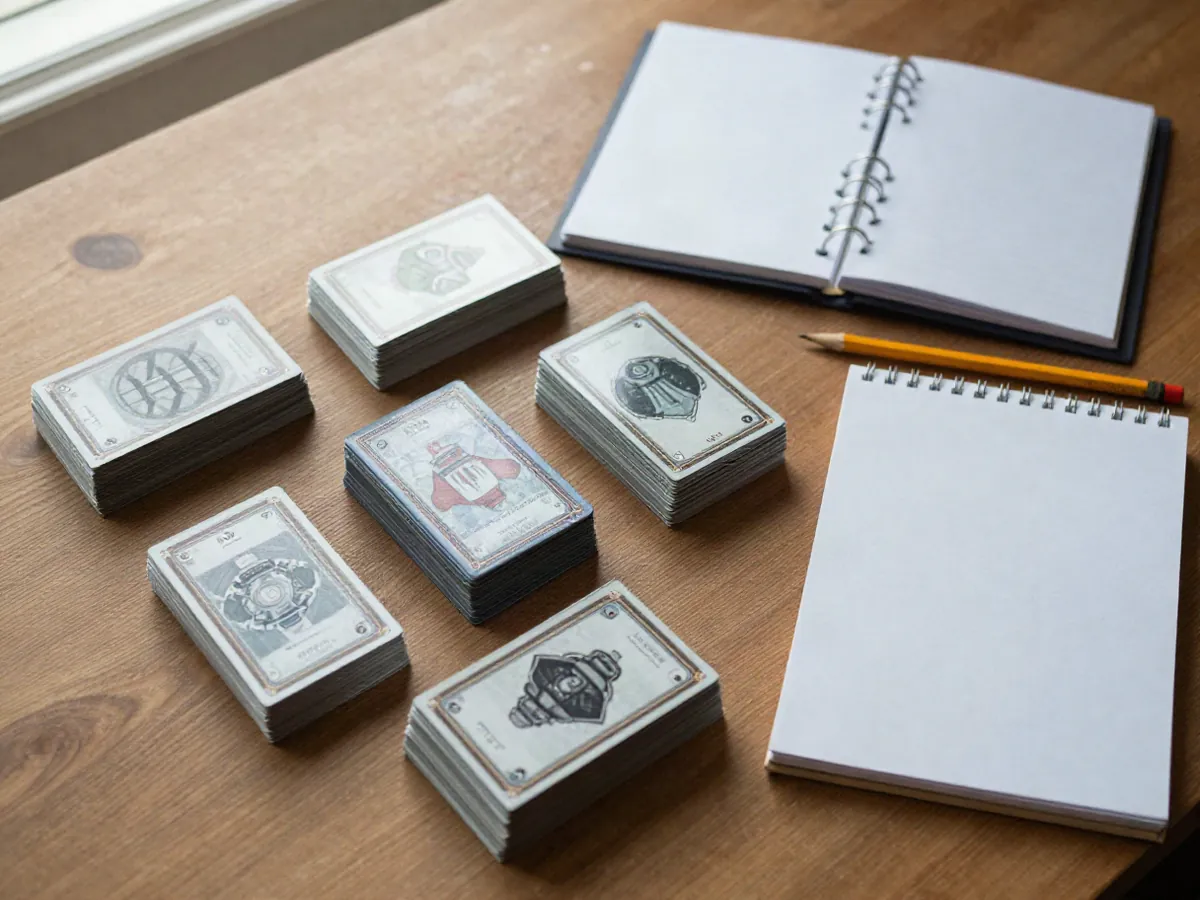
Sort first, price second
The biggest mistake with a large collection is opening a price lookup for the first card and trying to work through the pile in random order. A shoebox of two thousand cards turns into an evening of scrolling and a total you do not trust. Sorting first costs an hour and saves several.
Start with broad piles: by set if you can read the set symbol or the number at the bottom of the card, otherwise by era or card type. Keep Pokémon cards apart from Trainer and Energy cards, because basic Energy is almost always bulk. Put anything with a holographic look, a special frame or an unusual rarity symbol into a separate pile called 'check'. You are not pricing anything yet; you are just deciding where your attention goes.
Pull the cards that could matter
In nearly every collection, a small share of the cards accounts for most of the total. Your job in this step is to find that share quickly, so you can spend your time on cards that move the number rather than on hundreds that never will.
Go through the 'check' pile and the rest of the stacks looking for the traits below. None of them guarantees value, but each one is a good reason to look a card up properly.
- Holographic or reverse holographic cards from older sets, especially the early printings.
- Cards with a rarity symbol other than a plain circle or diamond, such as a star or a special rarity marker.
- Full-art, alternate-art or textured cards from recent sets.
- Popular, long-standing characters, which tend to attract more collectors than obscure ones.
- Anything already sealed in a graded case, where the grade and the company are printed on the label.
Use one price type for every card
Price sources show several different numbers for the same card: a market price based on recent sales, a lowest current listing, a mid listing, and a high one. If you mix them, your total is meaningless, because a lowest listing on one card and a high listing on the next will not add up to anything you can compare later.
Pick one price type before you start and write it at the top of your notes. Market price from recent sales is a sensible default because it reflects what buyers actually paid rather than what sellers hope for. Whichever you choose, treat the result as a reference, not an offer and not an appraisal. A buyer, a dealer or a marketplace can land well above or below it depending on condition, timing and fees.
Separate bulk from singles
Bulk cards are the common, unremarkable cards that are worth very little each. Looking up every one of them wastes time, and the lookup often costs more than the card could ever add to the total. Decide a cutoff for yourself: anything that does not stand out in the sorting step goes into a bulk count, and you record only how many bulk cards there are.
Singles are the cards you looked up individually. For these, check the exact set, the card number, the printing and the condition, because a reverse holo and a standard version of the same card can sit at very different levels. Be honest about condition. A card with whitening on the edges, a crease or a scratched surface is not near mint, and a reference price for near mint will overstate it. When you are unsure, price it one step lower and note the doubt.
Build the tally step by step
With your piles ready, the actual valuation is a short loop. You work through the singles one at a time, record the reference price of each, and add the bulk as a single line at the end. The Card Value Scanner app on Android can help you identify cards from a photo and keep a running total, and a tally tool on the website lets you add values and quantities by hand.
Do the work in small batches, a binder page or a stack of fifty at a time, and stop when you are tired. Errors creep in when you rush, and they are hard to find in a long list afterwards.
- Identify the card: name, set and card number, ideally from the bottom of the card.
- Note the printing and the honest condition.
- Look up the reference price using your chosen price type.
- Record the quantity if you own duplicates, then move the card to a 'done' pile.
- At the end, add the bulk count as one line and total everything.
Keep a CSV record you can update
A spreadsheet saved as a CSV file is the simplest durable record. It opens in any spreadsheet program, it is easy to back up, and it lets you sort by value to see where your total actually comes from. One row per card, one column per fact.
Add a column for the date you checked the price, because every number in the file is a snapshot. Revisit the top twenty or so cards every few months rather than repricing everything, since those are the rows that decide the total.
- name
- set and card number
- printing (standard, holo, reverse holo and so on)
- condition
- quantity
- reference price, price type and date checked
Common mistakes and quick answers
Most wrong totals come from a small set of habits that are easy to fix once you know them. The list below covers the ones that show up most often, followed by a short answer to a question people ask a lot.
Should you get cards graded before valuing them? Not for the first pass. Value the collection raw, using an honest condition, and only consider grading for the few cards where the gap between the raw and graded reference looks worth the cost and the wait. The grading calculators on the site are built for exactly that follow-up question.
- Mixing price types or sources within one total.
- Pricing every card as near mint without inspecting the surface and edges.
- Confusing similar printings, such as a reverse holo and a standard version, or two sets with the same artwork.
- Counting duplicates once, or counting them at full value without checking condition.
- Treating the total as what you will receive when selling, and forgetting marketplace fees and shipping.
Sources and further reading
- Pokémon Trading Card Game – official site — Background on sets, card types and rarity symbols.
- TCGplayer Help Center — Explains how market price and listing prices are shown.
Keep exploring
All blog posts
How to find a Pokémon card's set and card number
The set symbol and the collector number are small, but together they tell you exactly which printing is in your hand. Here is where to look, and what to do when they are missing.
Read article
Card condition explained: near mint, lightly played and more
A plain-language walkthrough of the raw condition scale, what to check on corners, edges, surface and centering, and why wear changes what a card can sell for.
Read article